A broken tooth needs more than material placed over the visible gap. The dentist first identifies the fracture pattern, checks the tooth’s strength and pulp, then decides whether a direct filling can restore it or whether a different repair is safer.
Key takeaways
- A chip needs examination to rule out pulp, root, and hidden cracks.
- Composite suits many small repairs; larger breaks may need an inlay, crown, or root canal.
- Avoid hard, sticky foods until your dentist confirms the repair is stable.
- Seek urgent care for severe pain, swelling, bleeding, or a loose tooth fragment.
What the dentist checks before choosing a filling
A restoration filling for broken tooth in dombivli is appropriate only after the dentist checks how much tooth remains, how deep the break travels, and whether the pulp or root is involved. A visible chip does not automatically mean decay or a cavity.
Conversely, a normal-looking surface does not prove that a simple filling will hold.
The examination considers remaining enamel and dentine, crack direction, gum involvement, tooth location, and chewing forces. Pain when biting or releasing the bite, hot or cold sensitivity, and intermittent symptoms can point to a hidden crack. The dentist may use a bite test, transillumination to show crack lines, gum probing, and pulp vitality tests.
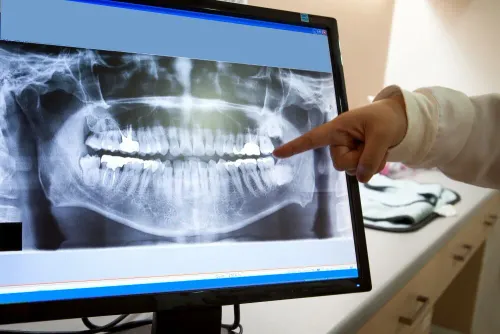
Dental X-rays help when decay, the fracture, or the root cannot be assessed by sight alone.
| Finding | What it suggests | Filling decision |
|---|---|---|
| Small enamel chip | Surface loss with sound tooth beneath | Direct repair may suit |
| Fractured cusp | A biting point has broken | Filling may be inadequate; cuspal coverage may be needed |
| Large missing section | Reduced tooth strength and heavy load | Consider an onlay or crown |
| Vertical crack | The fracture travels down the tooth | A simple filling may fail |
| Tooth split below the gumline | The tooth is divided beyond a clean repair margin | Ordinary filling is unsuitable |
A deep fracture, pulp damage, or insufficient sound structure can require temporary protection, root-canal treatment, or extraction instead of filling.
What happens during broken tooth filling treatment
A broken tooth filling treatment starts with confirming that a direct restoration is suitable. The dentist reviews the examination and any X-rays, plans the repair, and checks how the tooth meets its opposing tooth before treatment begins.
1. The dentist assesses the fracture and performs a bite check. This identifies pressure points that could dislodge the repair.
2. A small enamel chip may not need an injection. Work close to dentine or the pulp usually needs local anaesthesia, and the dentist tests your comfort before proceeding.
3. The dentist removes loose or decayed material, preserving sound enamel and dentine. Removing unstable edges prevents weak tooth structure from remaining under the filling.
4. The tooth is cleaned and dried, then isolated with a rubber dam, cotton rolls, suction, or another method. Saliva or blood contamination can weaken adhesive bonding.
5. A liner is placed when the remaining dentine needs protection. When bonding is indicated, the dentist etches or conditions the surface and applies the bonding system.
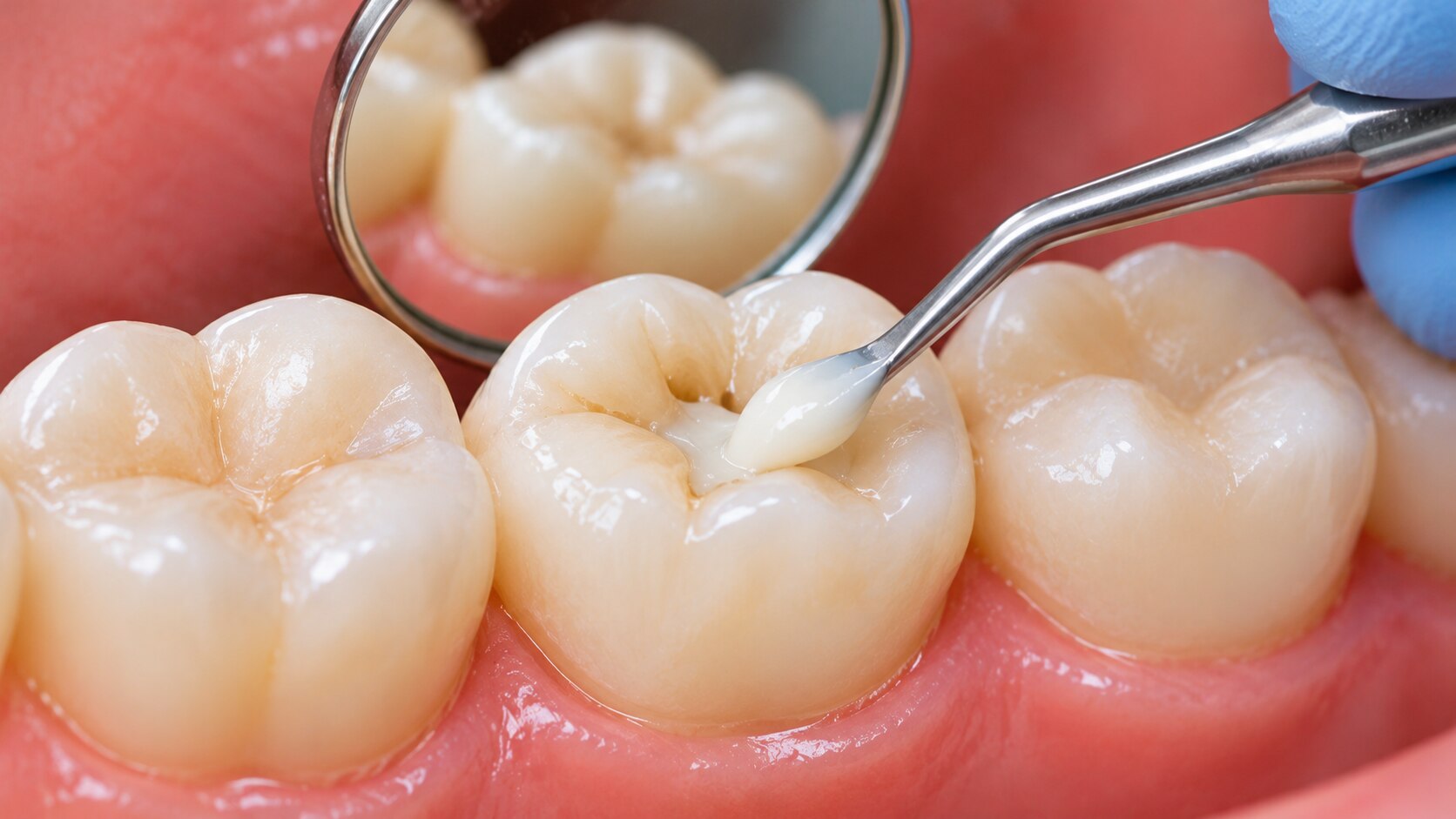
6. The restorative material is inserted, often in controlled amounts, then shaped to rebuild the missing contour. Composite material is cured with a dental light.
7. The dentist trims and polishes the restoration so it feels smooth and resembles the surrounding tooth.
8. You bite on marking paper for a final adjustment. Removing a high spot reduces unnecessary pressure during chewing.
A small repair may fit one visit. Diagnostic uncertainty or a deep fracture can require temporary protection, further testing, root canal treatment, or another restoration.
Which materials can be used for a broken tooth filling
Composite resin is usually chosen for a small chip or limited fracture when the tooth is dry, structurally sound, and appearance matters. The dentist bonds it to etched tooth surfaces, places it in thin layers, and hardens each layer with a curing light before contouring and polishing. Saliva or blood contamination can weaken adhesion.
| Material | Main advantages | Limits and suitable use |
|---|---|---|
| Composite resin | Tooth-coloured; bonds to enamel and dentine; rebuilds contour | Technique-sensitive; can chip or wear under heavy back-tooth forces |
| Glass-ionomer-based material | Releases fluoride and tolerates selected moisture conditions better | Weaker and less wear-resistant; useful for specific small, low-load areas or high-caries-risk situations |
| Metal amalgam | Strong in suitable cavities; appearance is metallic | Does not bond like composite and relies on cavity shape for retention; unsuitable when appearance or clinical conditions rule it out |
A filling for chipped tooth in dombivli is clinically the same repair performed elsewhere: it rebuilds lost contour and does not prove that decay or a cavity existed. A filling placed after decay removal replaces tooth structure removed because bacteria damaged it; both repairs may use composite.
Tooth-coloured does not automatically mean best for every back tooth. A large posterior defect, heavy chewing load, poor moisture control, or limited remaining tooth may require another restoration rather than direct composite.
Expect maintenance: avoid biting ice or hard objects, monitor rough edges or renewed sensitivity, and attend reviews. Composite and glass ionomer can need repair or replacement through wear, fracture, staining, or recurrent decay; amalgam also requires monitoring of the surrounding tooth.
When a direct filling is the right repair—and when it is not
A direct composite filling suits a small chip or limited fracture when the pulp is healthy and enough sound enamel and dentine remain to support the repair. It rebuilds the missing contour, but it does not turn a heavily weakened tooth back into an intact one.
The examination may point to a different repair:
- Reattach a recovered tooth fragment when it fits accurately and remains suitable for bonding.
- Use an inlay or onlay for a larger defect, especially on a back tooth that carries substantial chewing force.
- Choose cuspal coverage with an onlay or crown when a cusp is missing, the restoration is extensive, or the tooth is under heavy load.
- Avoid an ordinary filling when the fracture extends below the gumline, the tooth is split, or too little sound structure remains to hold it.
A visible pulp exposure needs more than material placed over the opening. The dentist must assess whether the pulp is reversibly irritated, irreversibly inflamed, or necrotic; root-canal treatment followed by a protective restoration may be necessary. An unrestorable tooth may instead require extraction and replacement.
This examination-dependent choice is why Dr. Sunil Shahane Dental Clinic in Dombivli can assess the crack, remaining structure, pulp, and bite before recommending treatment. A small repair may fit one visit, while a deep fracture can require temporary protection, further testing, root-canal treatment, or laboratory-made restoration.
Related service
Restoration and Fillings Dr. Pooja Ganu-Agnihotri in Dombivli offers high-quality dental restorations and tooth-colored fillings to repair teeth affected by decay, fractures,... View service → |
What to expect after the repair and how to protect it
Brief sensitivity or mild gum tenderness can follow a restoration, especially during the first few days. These effects should settle rather than intensify.
1. Contact the dentist if you develop persistent or worsening spontaneous pain, lingering pain after hot or cold, pain when biting, swelling, or a filling that feels high. A high bite often improves with a simple adjustment, but leaving it uncorrected can keep the tooth sore.
2. Treat a sharp chip as temporary damage, not a DIY repair. Do not file the tooth at home or apply household glue; cover the edge with orthodontic wax and chew on the opposite side until you are assessed.
3. Seek urgent care for facial swelling, fever, uncontrolled bleeding, or difficulty swallowing or breathing. These symptoms can signal infection, deeper injury, or a problem requiring prompt treatment.
A filling restores the missing shape, but it does not make a weakened tooth identical to an intact tooth. A large restoration, missing cusp, or tooth under heavy chewing force can still fracture and may need protective coverage later.
Protect the repair by taking these steps:
- Treat decay instead of sealing over its cause.
- Avoid ice and hard objects such as pens or nutshells.
- Use a night guard when bruxism has been diagnosed.
- Brush twice daily with fluoride toothpaste.
- Clean between teeth every day to reduce plaque around the restoration.
Frequently asked questions
What does a dentist check before choosing a filling for a broken tooth?
The dentist checks how much tooth remains, the break’s depth and location, signs of decay, pulp exposure, root involvement, cracks, and your bite. X-rays may be needed when the injury extends below the visible surface.
What happens during broken tooth filling treatment?
The dentist cleans and prepares the damaged area, selects a shade when using composite, applies the filling material in layers, hardens it with a curing light when required, and checks your bite before polishing the repair.
Which materials can be used for a broken tooth filling?
Common options include tooth-coloured composite resin, glass ionomer in selected situations, and amalgam where its strength and appearance are acceptable. The choice depends on the tooth’s location, the size of the repair, moisture control, bite forces, and cosmetic priorities.
When is a direct filling not the right repair?
A direct filling may be unsuitable when too little tooth remains, the break involves a cusp or root, a crack extends deeply, the pulp is exposed or infected, or the tooth faces heavy biting forces. An inlay, onlay, crown, root canal, or extraction may then be considered.
How should you protect a tooth after a filling for a chipped tooth?
Follow the dentist’s food instructions, avoid biting hard objects, maintain brushing and interdental cleaning, and use a mouthguard for contact sports or grinding when advised. Contact the dentist if pain persists, your bite feels high, or the filling loosens.
Keywords