Brown, yellow, or dark marks do not all respond to the same treatment: some sit on the surface, while others come from inside the tooth or signal decay, a damaged filling, or gum disease. You will learn how to distinguish scaling from polishing, identify when whitening or restorative treatment is needed, and compare providers before booking an appointment.
Key takeaways
- Scaling removes hardened calculus; polishing removes surface stains and smooths enamel.
- Coffee, tea, tobacco, and plaque stains often respond to professional cleaning and polishing.
- Whitening is needed for stains within the tooth rather than deposits on its surface.
- Compare examination, sterilisation, treatment steps, and aftercare before booking in Dombivli.
Cleaning, scaling, and polishing: what is the difference?
An adult with stained teeth often needs scaling and polishing, not polishing alone. Scaling removes plaque hardened into calculus above the gumline and, when necessary, below it. A dentist or hygienist uses hand instruments or an ultrasonic scaler; vibration and water from the ultrasonic tip loosen deposits while suction clears the mouth.
| Treatment | What it removes or changes | When it applies |
|---|---|---|
| Scaling | Hardened calculus above or below the gumline | Thick deposits, gum pockets, bleeding, swelling, or persistent bad breath |
| Polishing | Soft deposits and surface stain on exposed tooth surfaces | After scaling when pigment or residue remains |
| Bleaching | Changes the colour of natural tooth structure | Intrinsic discoloration that needs lightening rather than surface cleaning |
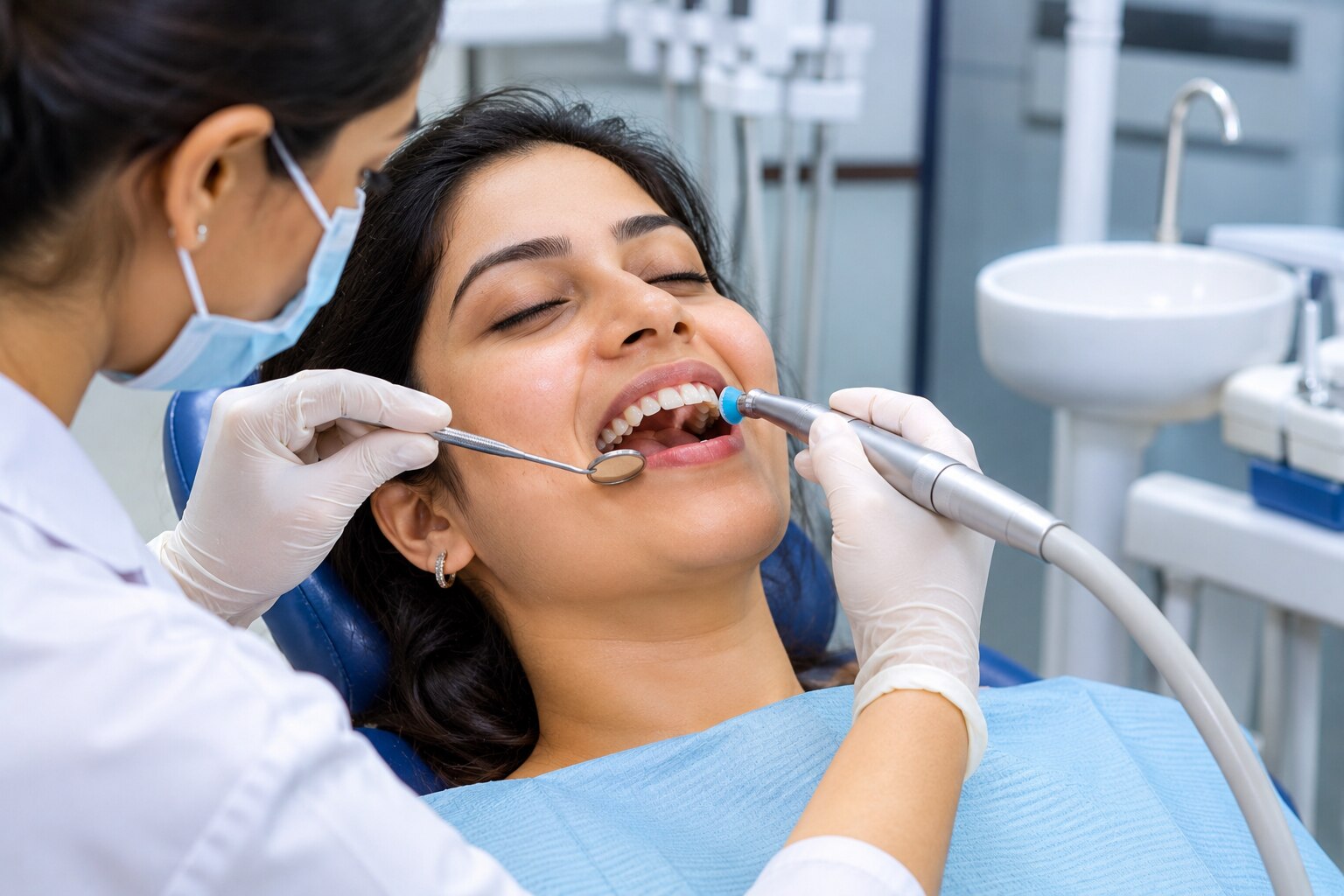
Polishing uses a rubber cup or small brush with paste. Air polishing can remove extrinsic stains, but powder choice matters. Sodium bicarbonate is more abrasive and requires caution with sodium-restricted diets or respiratory disease; glycine and erythritol are lower-abrasion options used around periodontal tissues and implants.
Scaling and polishing often happen in one visit, but polishing cannot remove thick calculus, treat gum pockets, or replace a periodontal assessment. It also does not bleach natural teeth; it can reveal their original shade. Peroxide-based whitening changes tooth structure, while fillings, crowns, and veneers do not lighten like enamel.
For teeth cleaning or polishing for stained teeth in Dombivli, ask whether the examination identifies the right treatment before choosing polishing alone.
Which stains will come off, and which need another treatment?
Extrinsic stains sit on the outer tooth surface, so scaling and polishing can remove many of them. Frequent tea, coffee, red wine, tobacco, paan, strongly pigmented foods, and plaque buildup commonly create this type of discoloration.
| Type of discoloration | Typical clues | Likely next step |
|---|---|---|
| Extrinsic stain | Thin, irregular film near the gumline or between teeth | Scaling and polishing |
| Intrinsic discoloration | Colour appears within enamel or dentin rather than as a deposit | Whitening may help selected cases |
| Localized tooth problem | One darkened or grey tooth, especially after injury or with pain, a crack, or a large filling | Examination and treatment of the tooth |
A stain from chlorhexidine mouthwash or iron preparations can remain stubborn after home brushing and require professional stain removal in Dombivli. Do not stop a prescribed product; speak with the clinician who prescribed it, because removing the mark does not remove its cause.
Intrinsic discoloration can follow aging, fluorosis, tetracycline exposure, childhood illness, trauma, or internal tooth disease. Whitening can improve selected cases, while a filling, crown, veneer, root-canal treatment, or another intervention may be needed for a localized problem.
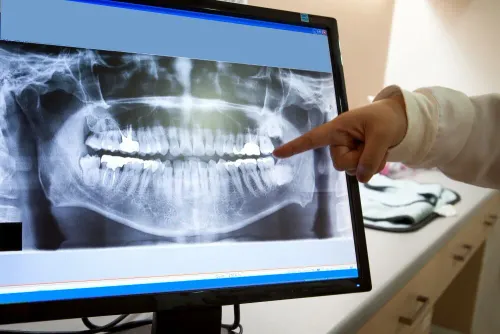
A dark spot that remains after professional cleaning may be decay or a defective restoration, not failed polishing. When discoloration is new, painful, localized, or linked to a fractured or heavily restored tooth, the dentist may order an X-ray or vitality test before cosmetic treatment.
This assessment matters whether you are arranging teeth cleaning for stained teeth in Dombivli or comparing other options.
What happens during the appointment, and what will it feel like?
The appointment starts with an examination of your teeth, gums, restorations, gum recession, and visible deposits. The clinician decides whether the discoloration is removable surface stain and whether you need X-rays, periodontal measurements, or further testing.
1. The clinician checks for calculus, gum swelling, bleeding, loose teeth, deep pockets, defective restorations, exposed roots, and a darkened tooth. Persistent bleeding, swelling, bad breath, or loose teeth calls for periodontal evaluation rather than cosmetic polishing alone.
2. Scaling removes hardened calculus above the gumline. If gum pockets contain deposits, the clinician cleans below the gumline or along root surfaces; polishing the visible crowns cannot treat that inflammation.
3. Polishing uses a rubber cup, brush, or selected air-polishing powder to remove remaining soft deposits and surface pigment. Air polishing can feel like a fine spray. Tell the clinician about sensitivity, implants, crowns, respiratory disease, a sodium-restricted diet, and medicines before sodium bicarbonate powder is used; glycine or erythritol may suit selected situations.
4. Expect vibration, scraping, cool water, spray, suction, and pauses for breathing or swallowing. Inflamed gums can bleed; that signals gum-tissue inflammation, not a reason to polish harder. Ask for a break if your jaw, neck, or gag reflex becomes uncomfortable.
Temporary sensitivity is more likely with recession or exposed roots. Before you leave, the provider should rinse away residue and review the result, gum condition, and next steps. Polishing for tooth stains in Dombivli restores surface colour; it does not bleach tooth structure.
How long does the result last, and what care does it require?
One visit is often enough for straightforward cleaning and polishing, but it is not permanent whitening. Heavy calculus, deposits below the gumline, gum inflammation, or a required X-ray can extend the appointment or make staged care necessary. Ask for an estimate after examination, not a fixed time promise.
Before professional stain removal in Dombivli, use this checklist:
- Eat normally unless the clinic gives different instructions.
- Disclose medical conditions and medicines, including sodium restrictions or treatments affecting bleeding.
- Bring details of whitening, mouthwash, or dental treatment you have already used.
- Ask whether the examination or X-ray is included in the appointment plan.
Afterward, follow the clinician’s brushing and interdental-cleaning instructions. Avoid tobacco and repeated coffee, tea, red wine, paan, and strongly pigmented foods if you want the surface to stay cleaner; plaque buildup also brings pigment back. The cosmetic effect depends on habits and maintenance, not a guaranteed number of months.
Polishing should be selective, not automatic at every visit. Repeated abrasive polishing can wear exposed dentin or cementum, roughen surfaces, and increase sensitivity, so the least-abrasive effective method is preferable.
Mild sensitivity can follow cleaning, especially with recession or exposed roots. Severe sensitivity, symptoms lasting beyond the short recovery period, or darkening concentrated in one tooth needs reassessment—not repeated polishing or unsupervised whitening.
How to compare providers before booking stain removal in Dombivli
Choose the provider who explains the stain’s cause and the complete cost before touching your teeth. A search for teeth cleaning stained teeth in dombivli should lead to questions, not a promise of a brighter shade.
| Question | Clear answer to look for | Warning sign |
|---|---|---|
| Fee | Examination, scaling, polishing, and necessary X-rays are included or separately itemised | One low price hides extra charges |
| Method | The clinician names the method and explains why sodium bicarbonate, glycine, or erythritol suits your gums, restorations, implants, and medical history | “Polishing” is offered without identifying the powder |
| Diagnosis | The mark is expected to respond to cleaning, or the provider recommends whitening, a new filling or crown, decay treatment, or periodontal care | Localized or unexplained discoloration is polished without examination |
| Infection control | Reusable ultrasonic scaler tips, periodontal instruments, and air-polishing handpieces are sterilized or otherwise validated for processing; single-use items are discarded | The answer is vague or instruments are reused without explanation |
For teeth cleaning or polishing for stained teeth in dombivli, ask whether an examination comes before treatment. A dark area on one tooth can be decay, a defective restoration, exposed root dentin, or a non-vital tooth; the clinician may need an X-ray or vitality test.
You can ask these questions at Dr. Sunil Shahane Dental Clinic or any local practice. Choose the provider who explains treatment limits, aftercare, and the total visit plan instead of claiming that polishing alone will create dramatic whitening.
Related services
Cleaning and Polishing Treatment Cleaning and Polishing Treatment Dr. Pooja Ganu-Agnihotri in Dombivli offers professional Cleaning and Polishing Treatment to help maintain healthy teeth and gums. View service → |
Teeth Whitening Treatment Dr. Pooja Ganu-Agnihotri in Dombivli offers professional Teeth Whitening Treatment to safely enhance the brightness and appearance of stained or... View service → |
Frequently asked questions
What is the difference between teeth cleaning, scaling, and polishing?
Cleaning is the overall appointment. Scaling removes plaque hardened into calculus with hand instruments or an ultrasonic scaler. Polishing uses a fine abrasive paste and rotating rubber cup to remove surface stains and smooth the tooth surface.
Which stained teeth can scaling and polishing remove?
Surface stains from coffee, tea, tobacco, coloured foods, and plaque often improve with scaling and polishing. Brown or grey colour within the tooth, fluorosis, tetracycline staining, and some old fillings need an examination and another treatment such as whitening, bonding, veneers, or replacement of the restoration.
What happens during professional stain removal?
The provider examines your teeth and gums, removes calculus with hand instruments or an ultrasonic scaler, rinses and suctions debris, then polishes the teeth with paste. You may feel vibration, water spray, pressure, and brief sensitivity.
How long do teeth-cleaning results last?
The result depends on your plaque buildup, diet, tobacco use, and brushing and interdental-cleaning routine. Brush twice daily with fluoride toothpaste, clean between teeth each day, and return for reviews at the interval your dentist recommends.
How should you compare providers for stain removal in Dombivli?
Ask whether a dentist will examine you first, whether the provider distinguishes calculus from intrinsic discoloration, which instruments are used, how instruments are sterilised, what sensitivity to expect, and when another treatment is appropriate.
Keywords