A damaged tooth is not automatically a root-canal case, but certain symptoms signal that the pulp or tissues around the root need prompt assessment. You will learn how to distinguish warning signs, understand the tests and treatment steps, judge whether the tooth can be saved, and choose appropriate follow-up care near Dombivli.
Key takeaways
- Lingering sensitivity, biting pain, swelling, or a dark tooth needs an RCT assessment.
- X-rays and pulp tests help determine whether the tooth can be saved.
- A crown often protects a root-treated tooth from fracture during normal chewing.
- Seek urgent care for facial swelling, fever, difficulty swallowing, or trouble breathing.
Do These Damaged-Tooth Symptoms Mean You Need an RCT Assessment?
Lingering hot or cold sensitivity, spontaneous toothache, pain on biting, facial swelling, a gum boil, or a darkening tooth all warrant a root-canal evaluation. No pain does not rule out infection: a dead pulp can produce an abscess around the root tip with few or no symptoms.
Deep decay, cracks, trauma, and repeated dental procedures can injure the pulp, but a damaged tooth is not automatically an RCT case. The key question is whether the pulp can recover and whether enough sound tooth remains to restore it.
| Finding | What it means | Usual treatment direction |
|---|---|---|
| Reversible pulp irritation | The pulp may recover after decay, leakage, or another cause is treated | Remove the cause and place a filling; monitor symptoms |
| Irreversible pulpitis | Inflamed pulp cannot recover; lingering sensitivity or spontaneous pain is common | Root canal treatment may be needed |
| Pulp necrosis | The pulp has died, allowing bacteria to reach the root-tip tissues | RCT or extraction, depending on restorability |
| Root-tip infection | An abscess or inflammatory lesion can develop even without pain | Drainage and treatment of the source; antibiotics alone do not cure it |
A filling treats a tooth when its pulp remains healthy or recoverable. Root canal treatment removes irreversibly inflamed or infected pulp and seals the canals instead.
For people comparing general dentistry in Dombivli with root canal treatment in Dombivli, request a documented pulp and restorability assessment rather than choosing from symptoms alone. A dentist must confirm the diagnosis before recommending RCT.
How Does a Dentist Confirm the Diagnosis and Decide Whether the Tooth Is Saveable?
A dentist decides whether a tooth needs RCT and can be restored by combining several findings, not by reading one X-ray.
1. The dentist records your medical and dental history, including pain triggers, previous treatment, trauma, medicines, and symptom duration. A visual examination then checks decay, cracks, colour change, swelling, fillings, and the amount of sound tooth remaining.
2. Percussion and bite testing assess inflammation around the root and cracks that hurt under pressure. Cold or electric pulp sensibility testing checks nerve response; a negative response can follow trauma, calcification, or an inadequate test, so it does not prove pulp death.
3. Periodontal probing checks pocket depth and support around each root. Periapical X-rays from suitable horizontal and vertical angles show root shape, bone changes, and lesions, but an X-ray alone cannot establish pulp vitality.
CBCT is reserved for suspected extra canals, root fracture, resorption, unusual anatomy, or a lesion that two-dimensional images do not explain. It is not a routine scan for every RCT.
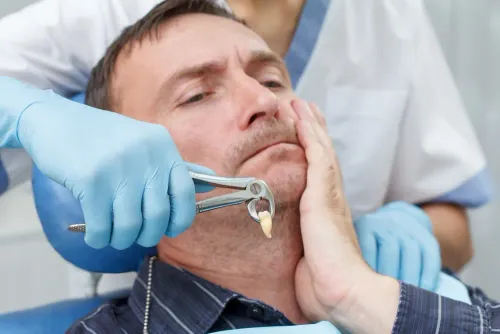
RCT is suitable when enough sound tooth remains to create a reliable seal and support a permanent restoration. A vertical root fracture, severe periodontal bone loss, inadequate remaining structure, or an unfavorable crack can make extraction and replacement the safer plan.
These standards apply whether you seek general dentistry root canal treatment in Dombivli or an RCT specialist in Dombivli.
A previously treated tooth that becomes painful needs a fresh examination before choosing retreatment, apical surgery, or extraction.
What Happens During Root Canal Treatment, and How Many Visits Does It Take?
Root canal treatment usually follows a planned sequence and is intended to keep the procedure comfortable. Severe inflammation can make numbness difficult, so the dentist may add supplemental anaesthetic techniques rather than proceed through pain.
- Local anaesthetic numbs the tooth and surrounding tissues, followed by rubber dam isolation to keep saliva away.
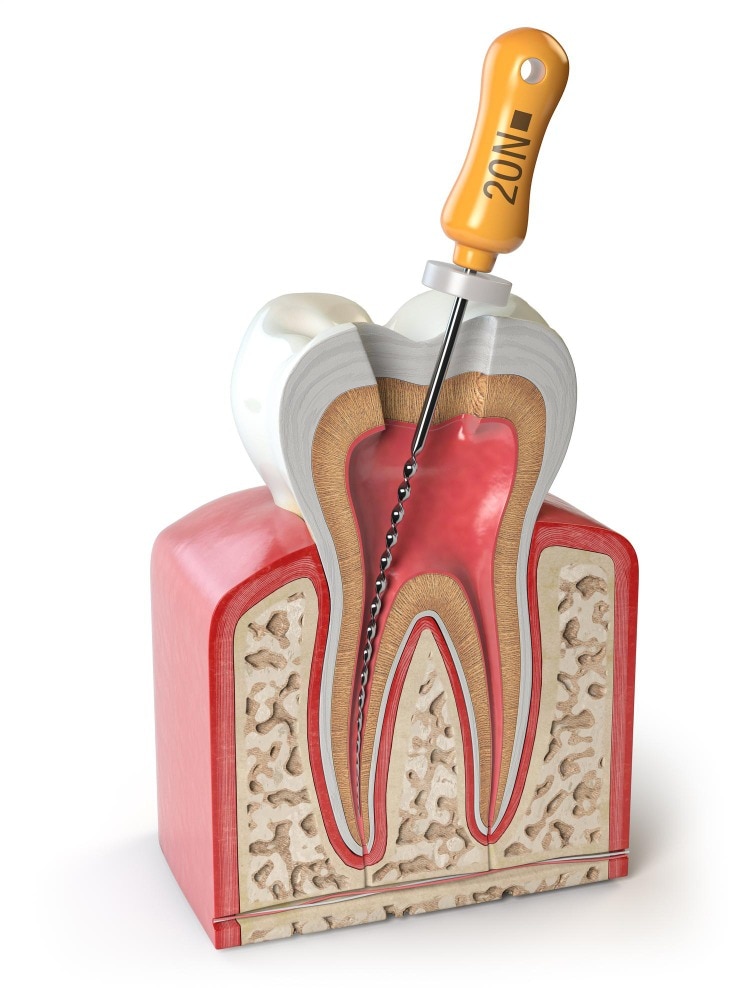
- The dentist makes an access opening through the tooth to reach the pulp chamber and canals.
- Small instruments and electronic or radiographic measurements establish each canal’s working length.
- The canals are cleaned and shaped with instruments and irrigation to remove inflamed or infected tissue and debris.
- The prepared canals are filled with gutta-percha and sealer, then the access opening is sealed with a temporary or permanent filling.
One visit can complete a straightforward case. Appointment length depends on the tooth’s position, the number and curvature of canals, calcification, infection, drainage, and whether medication must remain inside the canal between visits.
A temporary filling protects the tooth between appointments, but it is not the final restoration. Avoid heavy chewing on that side until definitive restoration is placed, because the remaining tooth structure can fracture.
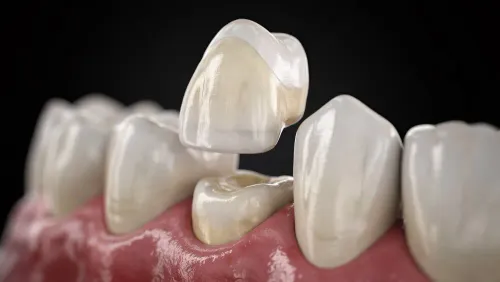
RCT preserves the remaining natural tooth; it does not regenerate the pulp. Posterior teeth often need cuspal coverage, such as a crown or onlay, based on remaining structure and chewing load. These are useful questions for anyone comparing root canal treatment in Dombivli or general dentistry in Dombivli.
What Should You Expect After RCT, and When Is It an Emergency?
Tenderness when biting or mild soreness for several days can occur after root canal treatment, especially when tissues around the root were inflamed. Follow your dentist’s pain-control instructions; do not chew hard foods on a tooth protected by a temporary filling.
Keep brushing and cleaning between the teeth unless your dentist tells you otherwise. Return for the permanent restoration, because a temporary filling does not provide lasting protection and the tooth can fracture under chewing pressure. This follow-up is part of successful root canal treatment in Dombivli, not an optional extra.
Antibiotics do not remove infected pulp, drain an abscess, or seal a tooth. A dentist prescribes them when examination and medical history show fever or malaise, spreading infection, or another clinical indication. Do not take leftover antibiotics or self-medicate; the prescribing clinician must review allergies, pregnancy, and other medicines.
Seek urgent dental or emergency medical assessment rather than waiting for a routine appointment if you develop:
- Increasing swelling of the face or neck
- Fever or rapidly worsening symptoms
- Difficulty swallowing
- Difficulty breathing
- Inability to open your mouth normally
A dental clinic in Dombivli can assess routine post-treatment discomfort, but breathing difficulty, neck swelling, or trouble swallowing requires immediate emergency care.
How Can You Choose the Right RCT Provider Near Dombivli?
Compare the written treatment plan, not the clinic’s location label. For general dentistry root canal treatment in Dombivli, ask who will perform the RCT and whether that dentist records the pulp diagnosis and whether the tooth is restorable.
| Provider | Best fit | Ask about |
|---|---|---|
| General dentist | Routine, restorable teeth | Rubber-dam isolation, periapical X-rays, visit plan and final restoration |
| Endodontist | Complex pulp and root problems | Additional postgraduate training, retreatment experience and referral options |
| Extraction provider | Teeth that cannot be predictably restored | Healing time, chewing impact and replacement choices |
Use this checklist before consenting:
- Is rubber-dam isolation used, and are periapical images taken from suitable angles?
- Is CBCT recommended only when it could reveal extra canals, unusual anatomy, resorption, fracture or an unexplained lesion?
- How many visits are expected, and will medication or drainage require another appointment?
- What temporary filling will protect the tooth, and what permanent restoration will follow?
- If canals are calcified, unusually curved, or treatment fails, who handles the case?
- When would you refer for retreatment, unusual anatomy, trauma or suspected root fracture?
An RCT specialist in Dombivli may be the better choice for those cases. Saving a restorable natural tooth requires appointments and a permanent restoration; extraction creates a missing-tooth decision involving healing, chewing and replacement planning.
Dr. Sunil Shahane Dental Clinic can be considered as a dental clinic in Dombivli that connects diagnosis, RCT and restorative follow-up; compare its documented plan and suitability of care with alternatives.
Related services
Root Canal Treatment Dr. Pooja Ganu-Agnihotri in Dombivli provides advanced Root Canal Treatment (RCT) to save severely decayed, infected, or damaged teeth while... View service → |
Crown and Bridge Treatment Dr. Pooja Ganu-Agnihotri in Dombivli provides high-quality Crown and Bridge Treatment to restore damaged, weakened, or missing teeth. View service → |
Frequently asked questions
Which damaged-tooth symptoms need a root canal assessment?
Lingering hot or cold sensitivity, spontaneous toothache, pain when biting, facial swelling, a gum boil, or a darkening tooth need assessment. An infected or dead pulp can exist without pain.
How does a dentist confirm whether root canal treatment is needed?
The dentist reviews your symptoms, tests the tooth’s response to cold or electrical stimulation, checks for tenderness, examines the gums, and takes dental X-rays. These findings help determine whether the pulp is infected and whether the tooth is saveable.
How many visits does root canal treatment take?
Treatment may take one or more visits depending on infection, tooth anatomy, drainage, and the restoration required. The dentist removes infected pulp, cleans and seals the canals, then plans the final filling or crown.
What should you expect after root canal treatment?
Mild tenderness after treatment is common and usually improves. Follow your dentist’s instructions, avoid chewing hard foods on the tooth until it is restored, and arrange the permanent restoration promptly.
When is a root canal emergency?
Contact a dentist urgently for facial swelling, fever, rapidly worsening pain, difficulty swallowing, difficulty breathing, or swelling around the eye. Do not wait for pain if these signs appear.
Related services
Restoration and Fillings Dr. Pooja Ganu-Agnihotri in Dombivli offers high-quality dental restorations and tooth-colored fillings to repair teeth affected by decay, fractures,... View service → |
Extraction Treatment Dr. Pooja Ganu-Agnihotri in Dombivli provides safe and comfortable tooth extraction treatment when a tooth cannot be preserved due to severe decay,... View service → |
Keywords