Loud snoring can be harmless, but pauses in breathing, choking, morning headaches and daytime sleepiness point to a problem that needs objective testing. You will learn how to recognise the concern, compare treatment choices and choose the right medical, dental or ENT pathway in Dombivli.
Key takeaways
- Snoring alone does not confirm sleep apnoea.
- Sleep testing distinguishes airway blockage from reduced breathing effort.
- Treatment depends on the cause, severity, and sleep-study findings.
- A custom oral appliance can suit selected adults with obstructive sleep apnoea.
When Snoring Signals More Than Noise
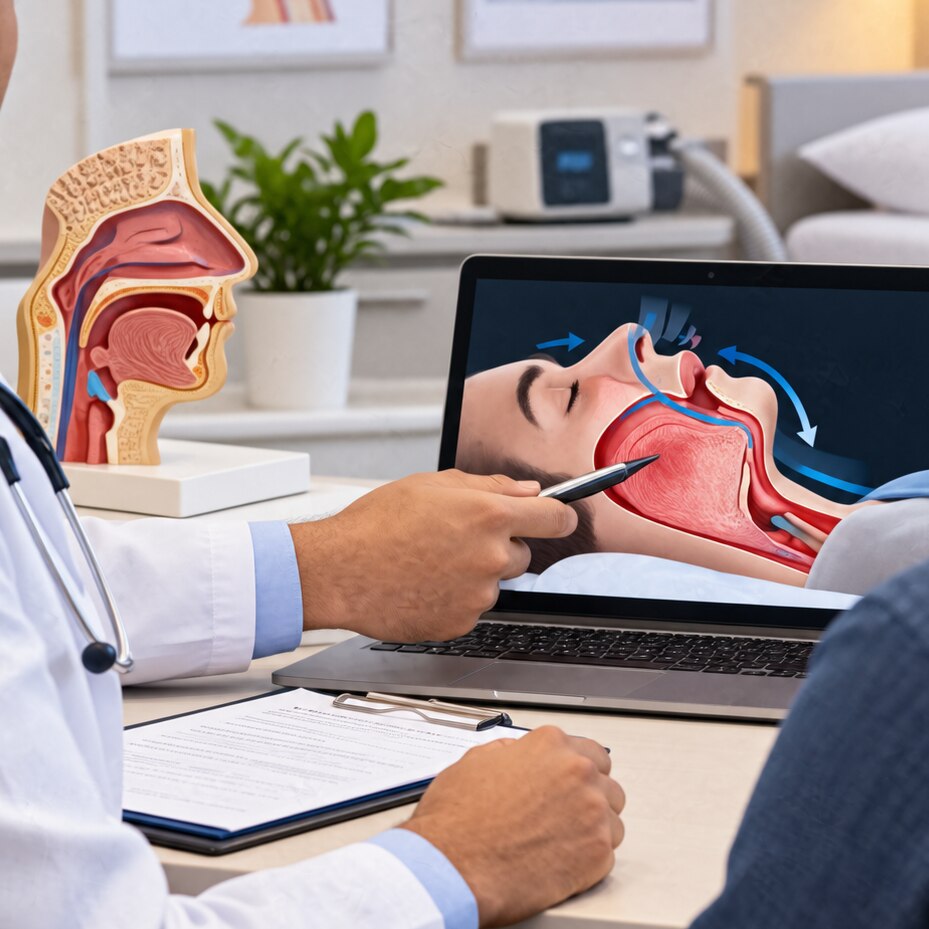
Snoring alone does not prove sleep apnoea. Primary snoring lacks repeated obstructive events and oxygen drops, while upper-airway resistance causes narrowed airflow and repeated arousals without complete airway closure. Obstructive sleep apnoea (OSA) involves recurrent upper-airway collapse; central sleep apnoea involves reduced breathing effort because the brain temporarily fails to signal breathing.
| Pattern | What happens during sleep | Clues needing attention |
|---|---|---|
| Primary snoring | Vibration without repeated obstruction | Noise without major daytime impairment |
| Upper-airway resistance | Narrowed airway and increased breathing effort | Restless sleep, frequent arousals, unrefreshing sleep |
| OSA | Airway collapse, pauses, oxygen desaturation | Witnessed pauses, gasping, choking |
| Central sleep apnoea | Reduced or absent breathing effort | Repeated pauses without the usual struggle to breathe |
Arrange prompt assessment if you have witnessed pauses, gasping or choking, morning headaches, dry mouth, excessive daytime sleepiness, poor concentration or resistant hypertension. These warning signs make snoring treatment options in Dombivli a sleep-health decision, not merely a noise-control purchase.
Seek emergency help for severe breathing difficulty, chest pain or fainting. Do not drive or operate machinery when sleepiness is dangerous.
Children with habitual snoring, laboured breathing, witnessed pauses, behavioural changes or school problems need paediatric assessment. Do not use an adult anti-snoring device before that evaluation.
How Sleep Apnoea Is Screened and Confirmed
Before choosing sleep apnoea treatment in Dombivli, complete a clinical review and objective sleep test. STOP-BANG is a risk screen, not a diagnosis:
- Snoring: do you snore loudly?
- Tiredness: are you tired or sleepy during the day?
- Observed apnoea: has anyone seen breathing pauses?
- Pressure: do you have high blood pressure?
- BMI: is it over 35?
- Age: are you over 50?
- Neck: is circumference over 40 cm?
- Gender: are you male?
More “yes” answers raise risk, but they do not prove obstruction or show severity.
A clinician can arrange a technically adequate home sleep apnoea test for a straightforward adult with suspected obstructive sleep apnoea and no major competing condition. Overnight polysomnography is needed for suspected central apnoea, significant heart or lung disease, neuromuscular disease, opioid use, unusual symptoms or an unexplained result.
A negative or technically inadequate home test does not exclude disease; persistent suspicion calls for polysomnography.
AHI means apnoea and hypopnoea events per hour of sleep.
| AHI range | Meaning |
|---|---|
| Less than 5 | Not diagnostic by AHI alone |
| 5–14 | Mild OSA |
| 15–29 | Moderate OSA |
| 30 or more | Severe OSA |
Symptoms, oxygen desaturation, sleeping position and conditions such as hypertension matter alongside AHI. A credible sleep apnoea clinic in Dombivli provides clinician-led assessment, validated testing, qualified interpretation, CPAP support, oral-appliance coordination and referral to sleep medicine or ENT when required.
Matching Treatment to the Type and Severity of the Problem
Match treatment to the mechanism, severity and daytime impact—not simply the volume of snoring. A sleep breathing treatment in Dombivli should address the sleep-test result and contributing conditions.
| Option | Best fit | Effort or limitation |
|---|---|---|
| Side sleeping or positional therapy | Obstruction substantially worse on the back | Benefit depends on wearing or maintaining position; it does not treat non-positional obstruction. |
| Weight reduction | OSA with overweight or obesity | It can improve severity, but OSA may persist and does not automatically replace CPAP or another airway treatment. |
| Regular sleep schedule; avoiding evening alcohol and sedatives | Worsening from sleep deprivation, alcohol or sedating medicines | These measures reduce triggers but do not correct established airway collapse. |
| Nasal corticosteroid | Allergic rhinitis causing nasal blockage | It can improve nasal breathing and CPAP tolerance, but does not reliably cure OSA. |
| Mandibular advancement device | Selected adults who prefer it or cannot tolerate CPAP | Requires suitable teeth, gums and jaw joints, fitting, gradual adjustment and follow-up testing. |
| CPAP | Many people with moderate or severe OSA, significant oxygen desaturation or excessive sleepiness | Use it consistently; troubleshoot mask leak, nasal symptoms, poor fit and pressure discomfort rather than abandoning it. |
| Surgery | Selected anatomy, such as obstructing tonsils or nasal structure | Requires anatomical assessment, and results vary. |
| Medical treatment | Central sleep apnoea or contributing heart, lung, neurological or medication problems | Needs physician-led management, not a routine anti-snoring device. |
Nasal treatment and weight loss do not automatically replace airway treatment. Strips, sprays and clip-ons have limited evidence and cannot treat apnoea; unassessed online devices can injure teeth, jaws or breathing.
When a Custom Oral Appliance Is a Sound Choice
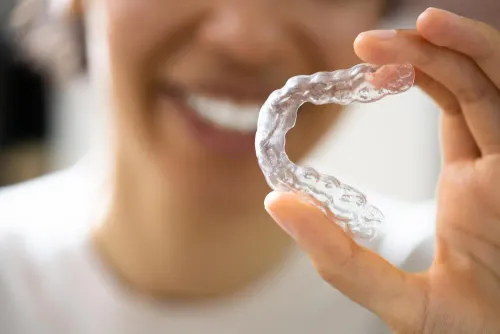
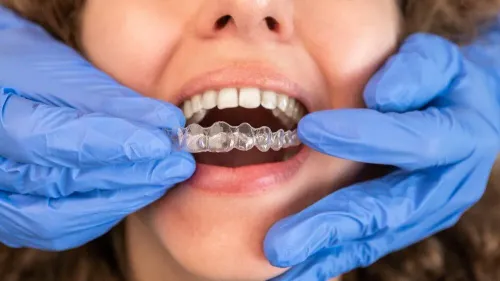
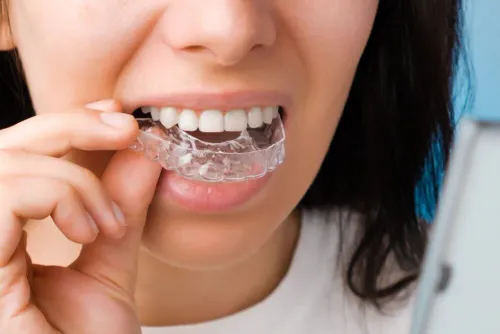
A mandibular advancement device is a sound choice when testing confirms obstructive sleep apnoea or airway-related snoring and you prefer an oral option or cannot tolerate CPAP. A custom, titratable appliance advances the lower jaw gradually to stabilise or enlarge the upper airway.
It is not the same as a bruxism night guard. A grinding guard cushions teeth against clenching; it does not reposition the jaw or treat apnoea.
A snoring dentist in Dombivli assesses jaw position, tongue space, nasal breathing, bite, teeth, gums, periodontal health, dental retention, temporomandibular joints and existing appliances. The assessment also checks whether enough stable teeth can hold the device.
Reasonable selection factors include:
- CPAP intolerance or an informed preference for an oral appliance
- Mild or moderate disease, suitable airway anatomy and sound dental health
- No major oxygen desaturation or other reason to prioritise CPAP
CPAP remains preferable for many people with severe disease, marked desaturation or substantial daytime sleepiness. Avoid an appliance with loose teeth, active gum disease, too few teeth for retention, painful jaw-joint problems, severe nasal obstruction or suspected central apnoea.
The dentist fits the device, advances it in small steps and reviews comfort, breathing and bite at adjustment visits. Clean it as instructed; soreness, tooth movement, bite change, dry mouth and excess saliva can occur. Dental checks and follow-up sleep testing confirm whether it works.
Dr. Sunil Shahane Dental Clinic can contribute dental assessment to sleep breathing treatment in Dombivli, alongside medical diagnosis and sleep-professional follow-up.
Related service
Sleep Apnoea and Snoring Treatment Sleep Apnoea and Snoring Treatment Dr. Pooja Ganu-Agnihotri in Dombivli provides effective Sleep Apnoea and Snoring Treatment to improve breathing, sleep quality, and overall health. View service → |
A Practical Dombivli Pathway From Symptoms to Follow-Up
1. Start with a physician or sleep clinician in Dombivli, not an anti-snoring device. Record snoring, witnessed pauses, choking and gasping for several nights. Bring your medication list, blood-pressure readings, sleep reports, prior test files, dental history, and details of jaw pain or gum disease.
2. Complete a screening discussion, including STOP-BANG findings and daytime symptoms. The clinician can arrange a technically adequate home sleep apnoea test; choose overnight polysomnography when the home test is unsuitable, negative despite strong suspicion, or another sleep disorder is possible.
3. Review the report with a qualified clinician. Discuss the AHI, oxygen desaturation, sleep position and symptoms together, not the AHI alone. A sleep apnoea clinic in Dombivli should provide objective testing, qualified interpretation, CPAP mask and pressure support, dental-appliance follow-up, and referral to an ENT or sleep physician.
4. Follow the result: arrange CPAP setup for many cases of moderate or severe obstruction, major oxygen drops or excessive sleepiness; seek a snoring dentist in Dombivli for a custom oral-appliance assessment when appropriate; request ENT review for relevant nasal, tonsil or other anatomical obstruction.
Dental, sleep-medicine and ENT clinicians should share reports rather than treat in isolation.
5. Expect fitting, adjustment visits, equipment cleaning and long-term maintenance. Repeat sleep testing after an oral appliance or major treatment change confirms control. These steps make sleep apnoea treatment in Dombivli safer than choosing snoring treatment options in Dombivli from online claims.
For uncomplicated snoring, try side sleeping, congestion treatment and avoiding bedtime alcohol first. Witnessed pauses, choking, marked sleepiness or persistent snoring means those measures are not enough.
Frequently asked questions
When does snoring signal more than noise?
Snoring needs evaluation when it occurs with witnessed breathing pauses, choking or gasping, morning headaches, excessive daytime sleepiness, or repeated awakenings. Upper-airway resistance causes narrowed airflow and arousals without complete airway closure, while obstructive sleep apnoea involves repeated airway collapse.
How is sleep apnoea screened and confirmed?
A clinician reviews symptoms, medical history, sleep patterns, and airway features before arranging sleep testing. A home sleep apnoea test or overnight polysomnography measures breathing events, oxygen levels, airflow, and related sleep signals. Central sleep apnoea requires assessment of breathing effort and the underlying cause.
How are snoring treatment options matched to the problem?
Primary snoring may improve with positional changes, weight management, nasal treatment, and reducing alcohol near bedtime. Obstructive sleep apnoea may require positive airway pressure, a custom oral appliance, positional therapy, or surgery. Central sleep apnoea needs treatment directed at its cause and breathing pattern.
When is a custom oral appliance a sound choice?
A dentist-made mandibular advancement device can be considered for selected adults with primary snoring or mild-to-moderate obstructive sleep apnoea, especially when prescribed positive airway pressure is unsuitable or poorly tolerated. Follow-up and repeat testing help confirm that it controls breathing events.
Keywords