A crown protects a tooth that is still present, while a bridge replaces a missing tooth by relying on neighbouring teeth or implants. The right choice depends on how much tooth remains, whether the tooth can be saved, the condition of adjacent teeth and gums, your bite, and how much daily cleaning you can maintain.
Key takeaways
- Choose a crown for a damaged tooth that remains restorable.
- Choose a bridge to replace one or more missing teeth.
- Assess tooth strength, gum health and bite before deciding.
- Ask how each option will be maintained, repaired and replaced.
Crown or bridge: which problem are you actually treating?
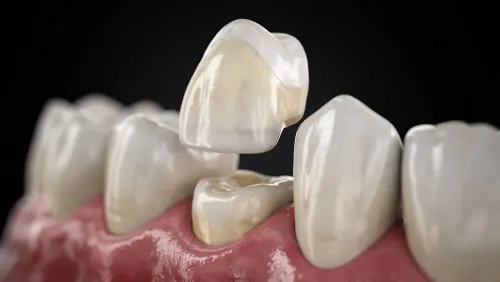
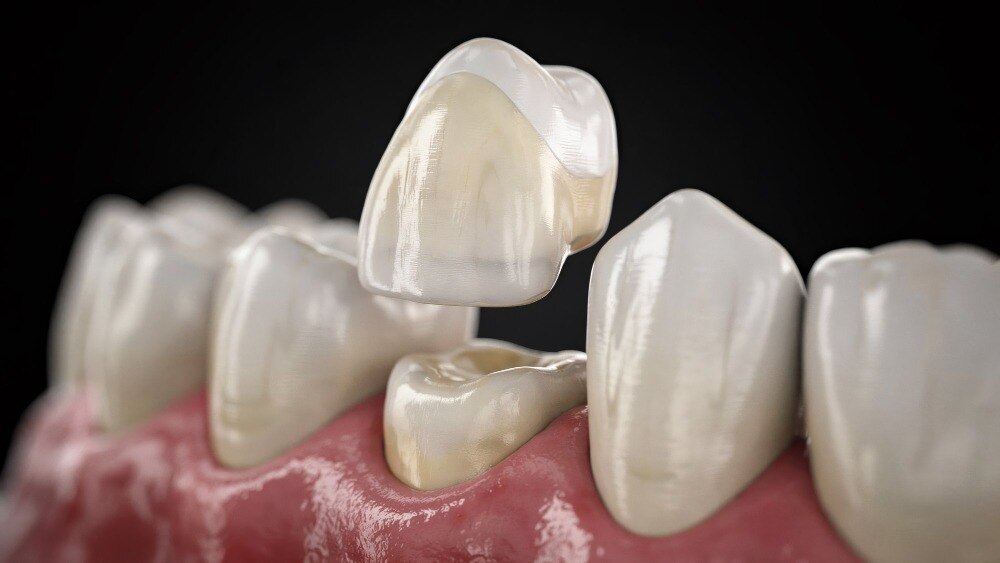
A crown treats a damaged tooth that is still present and restorable; a bridge treats a space left by one or more missing teeth. A crown covers one prepared tooth, so it reinforces that tooth but does not replace it.
A conventional bridge uses an artificial tooth, called a pontic, attached to retainers on neighbouring teeth.
For crowns or bridges for damaged teeth in Dombivli, do not choose a bridge simply because a tooth is cracked or heavily filled. If that tooth can be restored, a crown is usually the relevant replacement for lost structure.
If the tooth is missing, tooth replacement in Dombivli may involve an implant-supported crown, an implant-supported bridge, or a removable prosthesis.
| Option | When it is considered | Main limitation |
|---|---|---|
| Conventional fixed bridge | One or more missing teeth with sound teeth on both sides | Requires reshaping one or, commonly, two neighbouring teeth |
| Cantilever bridge | A missing tooth with support available on one side, often in a lower-load area | One-sided leverage can overload the supporting tooth |
| Maryland bridge | Selected front-tooth spaces or low-load situations where bonded wings can preserve tooth structure | Debonding is a recognised problem and bite position limits its use |
| Implant-supported bridge | Multiple missing teeth when implants, bone and surgical health are suitable | Requires surgery and healing, and does not suit every medical or periodontal condition |
Dental bridges in Dombivli restore chewing and appearance, but they do not replace a missing root or preserve jawbone like an implant may. A bridge can also fail through decay, gum-bone loss or fracture in a supporting tooth even while the pontic looks intact.
When does a damaged tooth need a crown instead of a filling?
A damaged tooth needs a crown instead of a filling when too little strong tooth remains to hold a filling safely or protect the chewing cusps. A filling suits a smaller cavity with solid walls. An inlay fits within the cusps, while an onlay covers one or more weakened cusps without covering the entire tooth.
| Option | Best fit | Main limitation |
|---|---|---|
| Filling | Small or moderate cavity with strong surrounding walls | Can fail when thin walls flex under biting |
| Inlay or onlay | Larger defect with intact margins; an onlay covers a missing or cracked cusp | Cannot rescue a tooth with extensive structural loss |
| Crown | Major fracture, missing cusp, decay beneath an old restoration, or thin remaining walls | Requires irreversible reduction of the remaining tooth |
The dentist assesses the tooth with an examination, periodontal measurements, bite assessment and appropriate radiographs before recommending dental crowns in Dombivli. The key checks are:
- How much healthy tooth structure remains above the gum?
- Are two or more supporting walls intact?
- Is the fracture confined to the crown, or does it extend below the gum?
- Has decay spread under an old filling?
- Has root-canal treatment weakened a posterior tooth enough to need cuspal coverage?
Root-canal treatment removes infected or irreversibly inflamed pulp; it does not strengthen the outside of the tooth. A crown restores external form and protects cusps, but crowns or bridges for damaged teeth in Dombivli are unsafe when a vertical root fracture, uncontrolled decay, inadequate structure or severe periodontal bone loss makes the tooth unrestorable.
Extraction followed by a replacement plan is safer then.
How tooth condition, gums and bite change the recommendation
A crown suits a tooth that remains restorable; a bridge suits a gap after tooth loss. Both require sound supporting bone, controlled decay, healthy gums and a stable bite. A conventional bridge also needs strong, well-positioned abutment teeth on both sides of the gap.
A bridge can fail even when its pontic still looks perfect. Decay at a retainer margin, gum-bone loss, an abutment fracture, poor bite contact or trapped plaque beneath the pontic can loosen or destroy the supporting tooth.
| Option | Main requirement | Main limitation |
|---|---|---|
| Crown | Enough healthy tooth and bone around the existing tooth | Cannot replace a missing tooth |
| Conventional bridge | Two suitable neighbouring abutment teeth and enough space | Requires reshaping natural teeth; one failing abutment can compromise the bridge |
| Implant-supported crown or bridge | Adequate bone, healthy gums and medical suitability for surgery | Requires surgery and healing; smoking, uncontrolled diabetes or some medicines can affect candidacy |
Your bite and habits can change the recommendation:
- Bruxism or clenching raises the risk of ceramic chipping, fracture and loosening. A night guard can protect a correctly designed restoration, but it cannot fix a poor fit.
- A deep bite can overload crowns and bridges, while chewing ice, bones or hard objects adds fracture risk.
- Limited space can prevent proper bridge contours or implant placement.
- Multiple missing teeth may require a longer bridge, implants or a removable prosthesis rather than one short bridge.
Ask for a bite, gum and cleaning-access assessment before choosing dental bridges in Dombivli or tooth replacement in Dombivli.
What happens during crown or bridge treatment?
The process begins with a check that the tooth and supporting tissues can carry the restoration, not with drilling. A crown bridge dentist in Dombivli will examine decay and cracks, record periodontal measurements, assess your bite, and take appropriate radiographs; symptoms alone cannot show whether a tooth is restorable.
- The dentist reshapes the damaged tooth for a crown. This reduction is irreversible. A conventional bridge also requires reduction of at least one neighbouring tooth, commonly two, to support its retainers.
- The prepared teeth are recorded with a physical impression or digital scan. The dentist selects a shade when appearance matters, then fits a temporary crown or bridge while the laboratory makes the definitive restoration.
- Material selection matches the tooth’s location, available clearance, bite force and appearance. There is no universally best option.
| Material | Practical trade-off |
|---|---|
| Metal alloy | Strong and space-efficient; appearance limits use in visible areas |
| Tooth-coloured ceramic | Natural appearance; needs suitable clearance and controlled bite forces |
| Zirconia | Tooth-coloured and strong; design and bite assessment remain important |
| Layered ceramic | Detailed appearance; the outer ceramic has a different chipping profile |
Temporary restorations are easier to dislodge or fracture than final ones. Avoid sticky foods and chewing directly on the temporary as instructed. Ask how long to protect it and contact the dentist if it feels loose. These steps apply whether you are comparing dental crowns in Dombivli or dental bridges in Dombivli.
Which option is easier to maintain, repair and replace?
A crown is usually easier to clean and repair because it covers one tooth. A bridge replaces a missing tooth but adds cleaning beneath the pontic and depends on neighbouring abutments. Neither becomes maintenance-free: both remain vulnerable to decay at margins, loose cement, fracture, gum disease and bite-related damage.
| Option | Daily effort and main failure pathway | Replacement reality |
|---|---|---|
| Crown | Brush twice daily with fluoride toothpaste and clean between teeth; decay, fracture or loose cement can affect the crowned tooth. | Repair depends on remaining tooth structure. |
| Conventional bridge | Clean around retainers and beneath the pontic; abutment decay, fracture, gum loss or poor bite can fail the bridge even when the pontic looks intact. | Replacing it can involve preparing new retainers. |
| Implant-supported restoration | Clean the crown, implant and surrounding gum; peri-implant disease, screw or ceramic fracture can occur. | An implant replaces a root and may help preserve jawbone; surgery and healing are required. |
| Denture | Remove and clean it daily; looseness, wear, sore gums and bone shrinkage can develop. | It is removable and may need adjustment or replacement as the mouth changes. |
For dental bridges in Dombivli, use a floss threader or superfloss under the pontic. Add an interdental brush where space permits, or a water flosser after the dental team confirms your technique.
Before choosing dental crowns in Dombivli or tooth replacement in Dombivli, ask a crown bridge dentist in Dombivli to check:
- Restorability, abutments, gums, bite and cleaning access
- Periodontal measurements, bite assessment and appropriate radiographs
- Whether extraction, root-canal treatment, extensive tooth reduction or multi-unit bridgework is truly necessary
Seek a second opinion before any of those irreversible decisions. Dr. Sunil Shahane Dental Clinic can provide a local examination and comparison, not a reason to choose one option automatically.
Related services
Crown and Bridge Treatment Dr. Pooja Ganu-Agnihotri in Dombivli provides high-quality Crown and Bridge Treatment to restore damaged, weakened, or missing teeth. View service → |
Restoration and Fillings Dr. Pooja Ganu-Agnihotri in Dombivli offers high-quality dental restorations and tooth-colored fillings to repair teeth affected by decay, fractures,... View service → |
Frequently asked questions
What is the difference between a crown and a bridge?
A crown covers and reinforces one damaged tooth that is still present and restorable. A bridge replaces one or more missing teeth using supporting teeth or implants.
When does a damaged tooth need a crown instead of a filling?
A crown is considered when decay, cracks or a large old filling has weakened too much tooth structure for a filling to protect reliably.
How do gums and bite affect the choice between a crown and bridge?
Healthy gums, adequate supporting tooth structure and a stable bite improve the outlook for either option. Active gum disease, weak supports or heavy biting forces must be addressed first.
What happens during crown or bridge treatment?
The dentist examines the tooth or gap, checks the bite and prepares the tooth or supporting teeth. Impressions or digital scans guide fabrication, followed by a fitting and cementation appointment.
Which option is easier to maintain, repair and replace?
A crown is cleaned like a natural tooth, while a bridge also requires floss threaders or interdental brushes beneath the replacement tooth. Repair or replacement depends on the support teeth, materials and cause of failure.
Related services
Full Arch Implants Full Arch Implants are an advanced solution for patients who have lost most or all of their teeth in the upper or lower jaw. Dr. View service → |
Single Tooth Implant A single tooth implant is a long-lasting and natural-looking solution for replacing a missing tooth. Dr. View service → |
Root Canal Treatment Dr. Pooja Ganu-Agnihotri in Dombivli provides advanced Root Canal Treatment (RCT) to save severely decayed, infected, or damaged teeth while... View service → |
Full Mouth Rehabilitation Full Mouth Rehabilitation is a comprehensive dental treatment designed to restore the health, function, and appearance of your entire mouth. Dr. View service → |
Keywords