A crown protects one repairable tooth, while a bridge replaces a missing tooth by relying on neighbouring teeth or implants for support. By comparing tooth condition, support, bite forces, materials, treatment steps and long-term maintenance, you can arrive at a more useful question than which option looks better: which restoration has a predictable chance of staying healthy in your mouth?
Key takeaways
- Choose a crown for a damaged tooth that still has a suitable root.
- Choose a bridge when one or more neighbouring teeth are missing.
- Check implants, dentures and tooth preservation before committing to a bridge.
- Compare fit, material, cleaning access and dentist experience—not appearance alone.
Crown or bridge: what problem does each restoration solve?
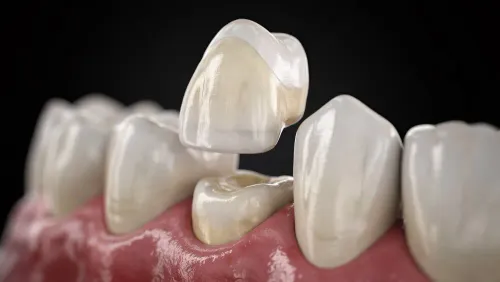
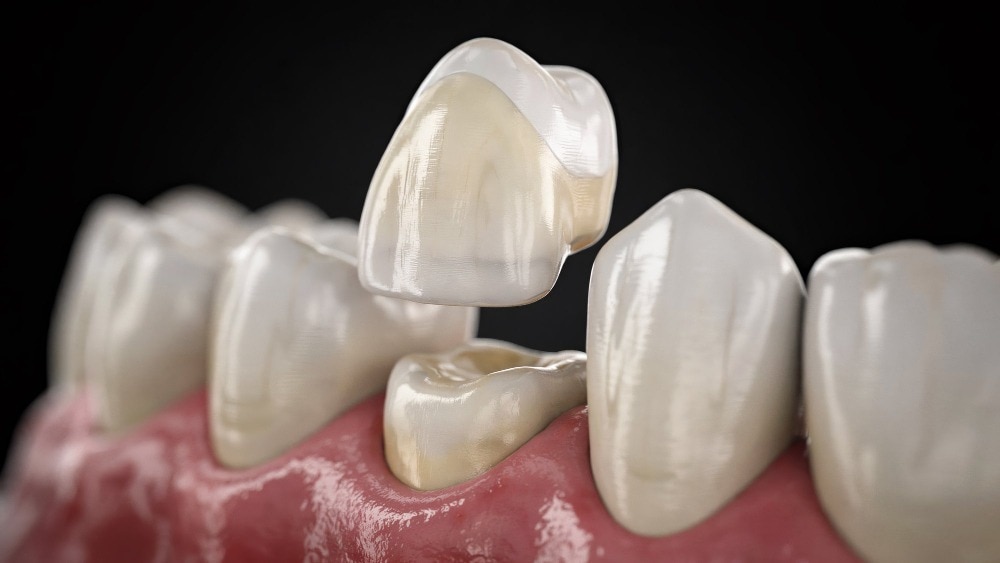
A crown protects one existing tooth; a bridge replaces one or more missing teeth. A crown covers a prepared natural tooth or a dental implant, restoring its shape and helping shield it from further fracture.
It does not replace a missing tooth, so dental crowns Kalyan patients consider are relevant only when a suitable tooth or implant is present.
A crown can suit a cracked or heavily restored tooth when enough sound structure remains, the crack stays above the gum and away from the root, and the tooth is restorable. A root-canal-treated back tooth still needs assessment of its remaining structure and coronal seal; endodontic treatment alone does not make it safe.
If the crack enters the root or the tooth cannot be predictably restored, crowning it will not solve the problem.
A bridge fills a gap by suspending one or more artificial teeth between natural teeth or implants that act as supports, called abutments. Dental bridges Kalyan patients consider can suit a missing tooth when neighbouring teeth are healthy, correctly positioned and strong enough to carry the load.
An artificial bridge tooth does not repair decay, cracks or gum problems in its supporting teeth; it only replaces the missing tooth. The abutments need separate treatment when disease or damage is present.
When neither crown nor bridge should be the first choice
Pause before choosing either restoration if the tooth cannot support it or disease remains active. Insufficient tooth structure, a vertical root fracture, or a crack extending below the gum can make a tooth unrestorable; crowning it only delays extraction.
1. Treat active decay and untreated gum disease before fitting a crown or bridge. Do not use mobile or poorly positioned teeth as bridge supports. If an abutment loses periodontal support or develops decay at its margin, the bridge can loosen or fail even while its artificial tooth still looks intact.
2. For one missing tooth, assess an implant-supported crown before preparing healthy neighbouring teeth for a conventional bridge. An implant needs adequate bone and healthy soft tissue, and it involves surgery and healing. If those conditions are unsuitable, consider a removable partial denture or a selected adhesive bridge.
3. Reconsider the sequence when there is inadequate bone for an implant-supported bridge, uncontrolled bruxism, or a bite that cannot be managed safely. These findings do not automatically make a crown or conventional bridge the better choice; disease control, bite stabilisation, grafting, or another replacement plan may come first.
A search for best dentist crowns or bridges kalyan should lead to a prognosis for every proposed support, not a quick choice based on the gap alone. Ask what happens if the support tooth fails, how each alternative protects healthy structure, and whether you can keep the area clean.
How tooth position and bridge design change the recommendation
The same missing tooth can receive different advice because location, bite force and available support change the risk. Front restorations prioritise translucency, natural contours and margins that do not show when you smile.
Premolars require a balance between appearance and chewing strength, while molars face higher forces and need greater fracture resistance with adequate material thickness.
| Option or design | Support and leverage | Where it fits | Main limitation |
|---|---|---|---|
| Tooth-supported bridge | Crowns on both sides support the artificial tooth | A gap with two healthy, aligned abutments | Preparing adjacent teeth is irreversible |
| Cantilever bridge | One-sided support carries greater leverage | Selected spaces with favourable bite forces | Weaker under high chewing loads |
| Maryland or resin-bonded bridge | Bonded wings attach to neighbouring teeth | Selected front or other low-load spaces | Adhesive retention is less reliable under heavy forces |
| Implant-supported bridge | Implants support the replacement without preparing adjacent natural teeth | Suitable bone and soft tissue with appropriate spacing | Requires surgery, healing and detailed assessment |
Cantilever and adhesive designs are poor choices for high-load molar spaces. The number, shape, alignment and periodontal health of the abutments matter more than filling the gap quickly; a weak or tilted support can undermine the entire bridge.
When comparing dental bridges Kalyan options, ask how the proposed design matches your bite and tooth position, not only how it looks. The same principle applies in cosmetic dentistry Kalyan consultations: visible margins and colour matter, but they cannot compensate for inadequate support.
What treatment involves, and which materials deserve comparison
A crown or tooth-supported bridge follows a planned sequence, not a single fitting appointment. For dental crowns in Kalyan or dental bridges in Kalyan, ask what each stage will reveal and which assumptions affect the design.
- Clinical examination, periodontal checks and X-rays when indicated identify decay, bone support, root problems and the condition of supporting teeth.
- Tooth preparation creates space for the restoration. This is irreversible removal of healthy structure, and the amount depends on the design, material thickness and remaining tooth structure.
- An impression or digital scan records the prepared teeth and opposing bite.
- A resin-based provisional protects the prepared tooth while the laboratory fabricates the final restoration.
- Try-in and fitting check contacts, colour, margins and seating.
- Cementation fixes the restoration after the fit is accepted.
- Bite adjustment prevents a high spot from concentrating chewing force.
An implant-supported replacement preserves adjacent teeth, but adds surgery, bone and soft-tissue assessment, and a healing period. Ask which route fits your anatomy rather than assuming cosmetic dentistry in Kalyan means choosing the most tooth-coloured material.
| Option | Appearance and margin visibility | Strength, thickness and repairability |
|---|---|---|
| Porcelain-fused-to-metal | Good appearance; metal margin can show as gums recede | Strong, but porcelain can fracture; limited repair |
| Monolithic zirconia | Tooth-coloured, with less translucency than lithium disilicate | High fracture resistance; useful in thin sections; repair is limited |
| Lithium disilicate | High translucency and natural appearance | Good for suitable loads; needs adequate thickness; chipped areas are harder to repair |
Ask for the named material, laboratory process, expected margin and repair plan before approving treatment.
How to choose a dentist and protect the result after fitting
A sound local choice depends on evidence, not a search ranking. Compare any “best dentist Kalyan” result or “best dentist crowns or bridges Kalyan” listing against:
- A documented examination and radiographs when indicated.
- A prognosis for every abutment tooth.
- Discussion of implant, removable and adhesive alternatives.
- The named material, laboratory and expected trade-offs.
- A written fee, review schedule and maintenance plan.
- Clear responsibility for root-canal, gum, implant and laboratory stages.
A consultation with Dr. Sunil Shahane Dental Clinic in nearby Dombivli can provide another treatment plan to compare; neither a promotional ranking nor the lowest quote proves suitability. The same standard applies when comparing cosmetic dentistry Kalyan providers.
After fitting, brush twice daily and clean beneath a bridge with a floss threader or interdental brush. Attend reviews so the dentist can assess margins, abutment health, bite and cleanability, not just colour.
| Sign | What it can indicate | What to do |
|---|---|---|
| Pain on biting or changed bite | Premature contact, inflammation or structural trouble | Request an examination |
| Persistent sensitivity or food trapping | Pulp, margin or fit problem | Arrange review |
| Looseness, fractured ceramic or bleeding | Cement failure, fracture or gum disease | Seek prompt assessment |
Choose the option that preserves healthy structure, controls disease, matches bite forces and can be kept clean.
Related service
Crown and Bridge Treatment Dr. Pooja Ganu-Agnihotri in Dombivli provides high-quality Crown and Bridge Treatment to restore damaged, weakened, or missing teeth. View service → |
Frequently asked questions
What problem does a crown solve compared with a bridge?
A crown covers and protects a prepared natural tooth or implant. A bridge replaces one or more missing teeth by attaching an artificial tooth to neighbouring teeth or implants.
When should neither a crown nor bridge be the first choice?
Consider preserving a treatable natural tooth, an implant-supported replacement, or a removable denture when the supporting teeth are weak, the tooth has an uncertain prognosis, or bridge preparation would remove too much healthy enamel.
How does tooth position affect the bridge recommendation?
Front teeth place greater emphasis on shape, shade and gum contours. Back teeth require strong chewing support. The dentist must assess the gap length, bite forces, available space and condition of the abutment teeth.
What should you compare when choosing crown or bridge materials?
Compare zirconia, porcelain-fused-to-metal, lithium disilicate and metal options for strength, appearance, tooth position, available space, opposing teeth and cost.
How can you protect a crown or bridge after fitting?
Brush twice daily with fluoride toothpaste, clean under a bridge with floss threaders or an interdental brush, avoid using restorations to open packages, and attend reviews for bite and gum checks.
Keywords